Article prepared for: UPAVE-LTD
Lead Contractor: Frank Wilkinson
Location: 11810 Kingsway NW, Edmonton, AB, Canada
Last Updated: Sept 20th , 2026
Important Note: This article is provided for general educational and informational purposes only. Cement stabilization requirements vary depending on site conditions, soil composition, moisture levels, drainage, traffic loads, intended use, and project specifications. Treatment depth, cement content, pavement design, construction methods, timelines, and costs should be determined based on a site-specific assessment and, where required, appropriate testing, engineering, or project specifications.
Looking for an experienced asphalt contractor in Edmonton? Contact UPAVE LTD to arrange a site assessment and discuss cement stabilization, site preparation, and asphalt paving solutions for your commercial or industrial property.
Table of Contents
ToggleIntroduction
When weak soil, moisture, freeze-thaw cycles, and heavy truck loads keep damaging your road, parking lot, truck yard, or industrial facility, surface repairs may not address the real problem. Cement stabilization mixes cement into suitable existing soil to strengthen the subgrade and create a more reliable foundation for pavement construction.
For Edmonton and Alberta properties, proper base preparation, grading, drainage, and compaction are key parts of long-term pavement performance. U-PAVE LTD brings more than 25 years of combined paving and site preparation experience to commercial, industrial, and municipal projects, with modern equipment and practical solutions based on your traffic, site conditions, and operating requirements.
You’ll learn how cement stabilization works, where it fits, what project steps are involved, which cost factors matter, how it compares with other options, and how to plan the work with less disruption. When you’re ready to discuss your site, you can Request a Free Quote and begin with a clear project assessment.
Key Takeaways
Cement stabilization mixes cement into suitable existing soil or aggregate to create a stronger, more stable foundation below asphalt or concrete.
It can help address weak subgrade conditions, moisture-related movement, rutting, settlement, and recurring pavement failures on commercial and industrial properties.
Edmonton projects also require proper drainage, grading, compaction, and pavement design because freeze-thaw cycles and heavy traffic can worsen weak base conditions.
Cement stabilization isn’t suitable for every site. Unsuitable fill, deep contamination, major drainage problems, or severe settlement may require excavation and base replacement.
A site assessment helps determine whether the project needs stabilization, localized base repair, drainage correction, resurfacing, or full-depth reconstruction.
Quick Answer
When is cement stabilization used on commercial or industrial properties?
Cement stabilization may be used for truck yards, warehouse access roads, loading areas, parking lots, equipment yards, private roads, commercial developments, and selected municipal routes. It is most useful when weak or inconsistent soil affects a defined area and the existing material can be treated effectively.
What Is Cement Stabilization and How Does It Strengthen Your Pavement Base?
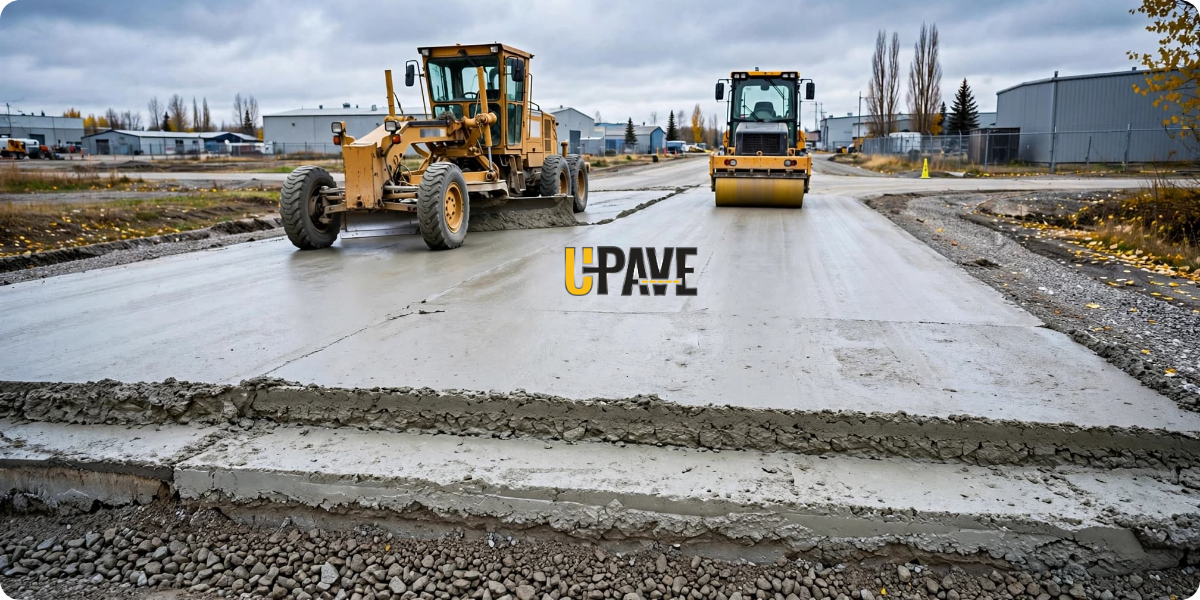
Cement stabilization improves the soil or aggregate below your asphalt instead of covering a weak base with a new surface. Cement is blended into suitable material, mixed thoroughly, moisture-conditioned, graded, and compacted to create a stronger, more stable pavement foundation.
The treatment depth and cement content depend on your soil conditions, moisture, drainage, traffic loads, and project design. A properly stabilized base can improve load support and reduce moisture-related movement beneath commercial roads, parking lots, truck yards, and industrial surfaces.
The difference between soil stabilization and cement stabilization
Soil stabilization is the broader category. It includes several methods used to improve weak or inconsistent ground before paving. Cement stabilization is one of those methods. It increases strength, improves moisture resistance, and helps the base support repeated vehicle loads.
Other approaches may be better suited to different materials and site conditions:
Lime stabilization can help modify certain clay-heavy soils.
Mechanical stabilization improves the soil through compaction, blending, or removal and replacement.
Aggregate-based stabilization adds and mixes granular material to improve grading and structure.
Cement stabilization binds suitable soil particles together to form a firmer working platform.
A site assessment is needed before selecting the treatment. Soil type, moisture content, drainage, existing grades, frost conditions, and expected traffic all affect the correct approach. The Federal Highway Administration’s pavement guidance describes stabilized base and subbase layers as load-bearing support between the pavement and underlying ground.
Your contractor should also review access requirements, phasing, and nearby structures before work begins. U-PAVE provides paving and ground preparation experience for commercial, industrial, and municipal projects throughout Edmonton and Central Alberta.
Why the base matters more than a new asphalt surface alone
Asphalt performance depends on every layer below it. If wet, weak, or poorly compacted material remains under the pavement, a new surface may only hide the problem for a short time.
You may see rutting where trucks repeatedly travel, settlement where the base shifts, or cracking as water and freeze-thaw cycles move through the structure. Potholes and recurring patches often point to base failure rather than a surface issue alone.
Base correction works best with proper drainage, grading, and compaction. Together, these steps help move water away from the pavement, create consistent support, and reduce avoidable repairs. For Edmonton properties, this complete approach can support a longer pavement lifecycle and better access for tenants, deliveries, employees, and heavy equipment.
Why Cement Stabilization Matters for Edmonton Roads and Industrial Yards
Edmonton pavement carries heavy traffic through wet springs, freeze-thaw cycles, and changing ground conditions. When the soil below your asphalt cannot support the load, surface repairs may fail even when the new asphalt looks sound. Cement stabilization can improve suitable weak soil, but it must be part of a complete site solution that includes drainage, grading, compaction, and proper pavement design.
How weak soil and poor drainage lead to pavement failure
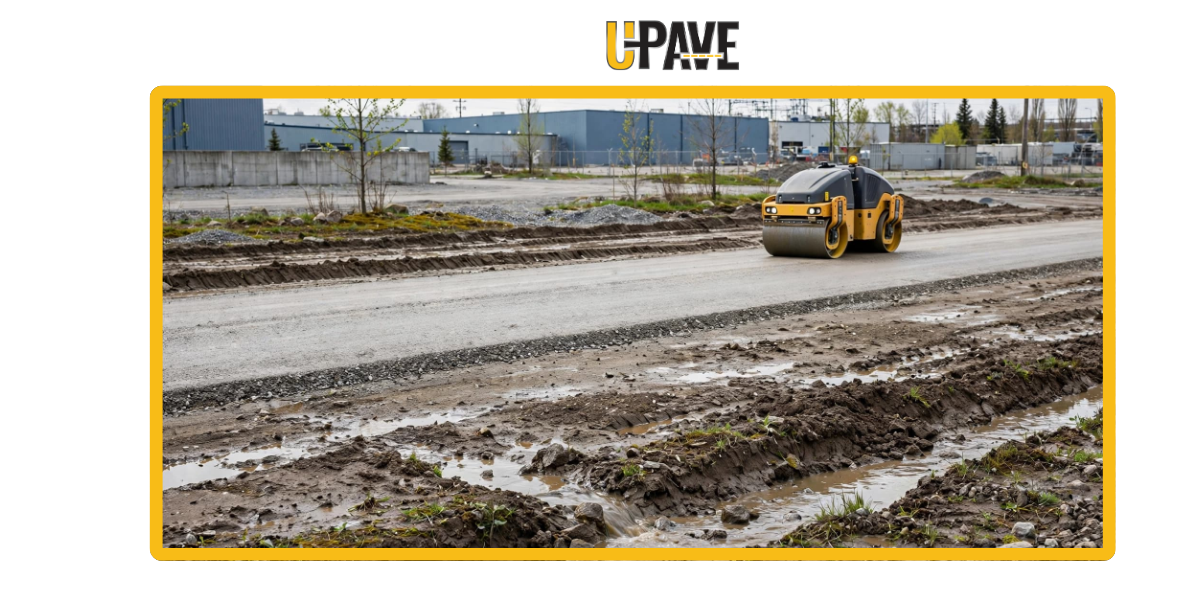
Water reduces the strength of many subgrades. When rain or melting snow collects beside or beneath pavement, the soil can soften and lose its ability to support truck and equipment loads. Heavy tires then force water and fine soil particles toward the surface, a process commonly seen as pumping.
The result may include:
Soft spots that deform under repeated traffic.
Wheel-path rutting in truck lanes and loading areas.
Settlement where weak or wet material compresses.
Frost heaving when trapped moisture freezes and expands.
Cracking, potholes, and uneven pavement movement.
Repeated patch failures because the underlying problem remains.
Standing water is often a grading or drainage concern, not a cement content problem. If water cannot leave the site, stabilization alone won’t correct the source of pavement movement. You may need ditching, catch basin work, subdrains, regrading, excavation, or improved surface slopes.
Cement stabilization strengthens suitable soil, but it doesn’t replace drainage correction or removal of material that cannot be stabilized.
Where stabilization can help on commercial and industrial properties
Cement stabilization is useful where heavy wheel loads or inconsistent soil conditions affect a defined portion of your property. Common applications include industrial yards, truck yards, warehouse access roads, loading areas, equipment yards, parking lots, private roads, commercial developments, and selected municipal routes.
A planned treatment can create a more consistent working platform for asphalt, concrete, or road base construction. It may be suitable in parts of a site where the existing soil can be mixed and compacted effectively. Other areas may require excavation and replacement, imported aggregate, deeper reconstruction, or a different construction method.
For example, a warehouse entrance used by loaded trucks may need stronger base preparation than a lightly used employee parking area. A phased plan can address the highest-load routes first while maintaining access for deliveries and tenants. U-PAVE’s commercial paving services can be coordinated with grading, drainage correction, excavation, and final pavement installation. A proper assessment helps match each area with the right treatment instead of applying one method across the entire property.
Signs Your Property May Need Subgrade Stabilization Before Paving
Visible pavement damage can point to deeper soil or base problems, especially on Edmonton properties exposed to freeze-thaw cycles, moisture, and heavy truck traffic. Surface damage alone cannot confirm that cement stabilization is needed, but recurring failures across the same pavement section deserve a closer assessment before you repave.
Surface warning signs that point to deeper ground problems
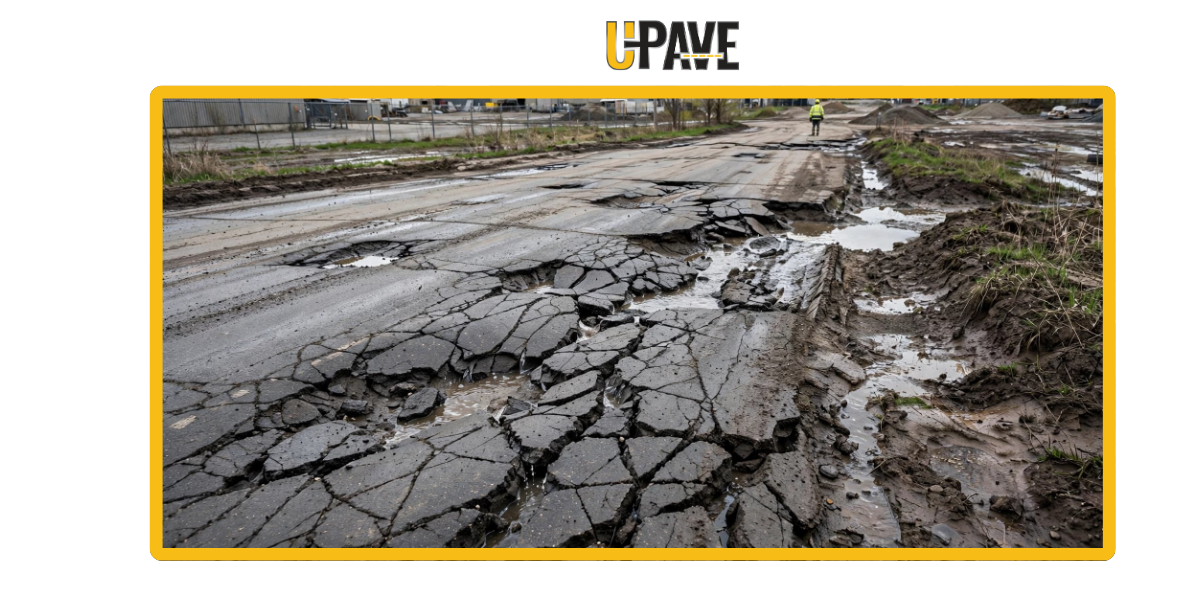
Watch for potholes that return after patching, deep cracks that extend beyond the repair area, and ruts along regular wheel paths. Depressions, uneven settlement, soft areas, standing water, and edge breakdown can also show that the pavement is moving because the material below it cannot support the load.
Pavement that fails soon after patching is another common warning sign. If the same area breaks down repeatedly, a surface repair may be treating the result instead of the cause.
A single pothole caused by localized damage may only need patching or base repair. Broad cracking, widespread settlement, and movement across an entire parking lot, access road, or truck lane suggest a larger subgrade or drainage concern.
Site conditions that influence the recommendation
Your contractor should review the conditions below before selecting a treatment:
Soil type, moisture content, frost susceptibility, and existing aggregate.
Drainage patterns, standing water, and the effect of freeze-thaw cycles.
Traffic volume, axle loads, pavement thickness, and operating requirements.
Utility conflicts, nearby structures, and the construction depth available.
Site history, including previous repairs, fill placement, settlement, and drainage changes.
Testing, probing, visual inspection, and a review of site history help determine whether stabilization, excavation, base replacement, or another approach is appropriate. Cement stabilization can improve suitable soil, but it isn’t the right solution for every material or failure.
The Federal Highway Administration’s stabilization guidance distinguishes improved subgrade applications from soil-cement base or subbase work. For an Edmonton commercial or industrial property, you can Request an Asphalt Assessment before defining the repair scope.
When repair, excavation, or full reconstruction may be a better fit
Shallow or isolated failures may need patching, localized base repair, or drainage correction. Widespread weak soil may justify cement stabilization when the existing material is suitable for mixing and compaction.
Deep contamination, unsuitable fill, major drainage problems, or utility conflicts may require excavation and replacement. Full reconstruction may be the better choice when several pavement layers have failed or the available construction depth is limited. A site assessment helps match the method to the actual problem, rather than applying stabilization across areas that need a different repair.
How a Cement Stabilization Project Works From Assessment to Final Paving
A successful cement stabilization project starts below the pavement surface. Your contractor must understand the soil, water movement, traffic demands, available work space, and final pavement design before treatment begins. The exact sequence may change with weather, material conditions, and site operations, but proper planning keeps the work controlled and avoids treating only visible pavement damage.
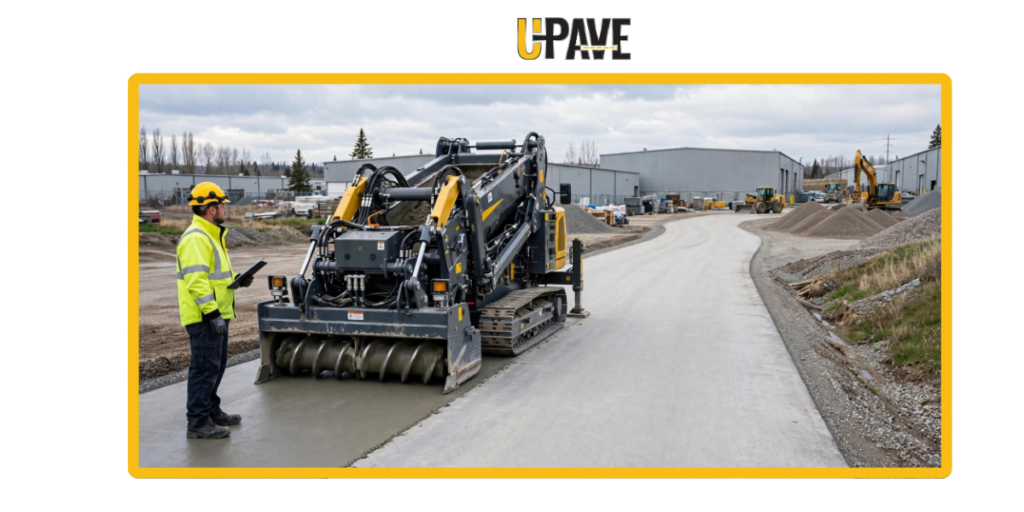
Assessing the soil, drainage, traffic, and project limits
The initial site visit should cover more than potholes and cracked asphalt. Your contractor reviews pavement condition, soil behavior, standing water, drainage paths, existing grades, utilities, property access, and nearby structures.
Traffic patterns also matter. Loaded trucks, forklifts, employee vehicles, and delivery schedules place different demands on the finished surface. The contractor should understand staging space, safe work zones, tenant access, and operational deadlines before preparing the scope.
A clear scope identifies whether the project needs cement stabilization, excavation, drainage correction, base replacement, or a combination of services. This prevents a new surface from covering a weak area that will continue to move.
Preparing and mixing the existing material
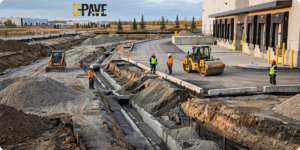
Crews remove unsuitable debris, contaminated material, or oversized material where needed. Suitable soil or aggregate is then spread, pulverized, or blended to create a consistent layer for treatment.
The planned cement content is applied across the work area. Moisture is added when required, and the material is mixed thoroughly so the cement is distributed evenly instead of forming isolated pockets.
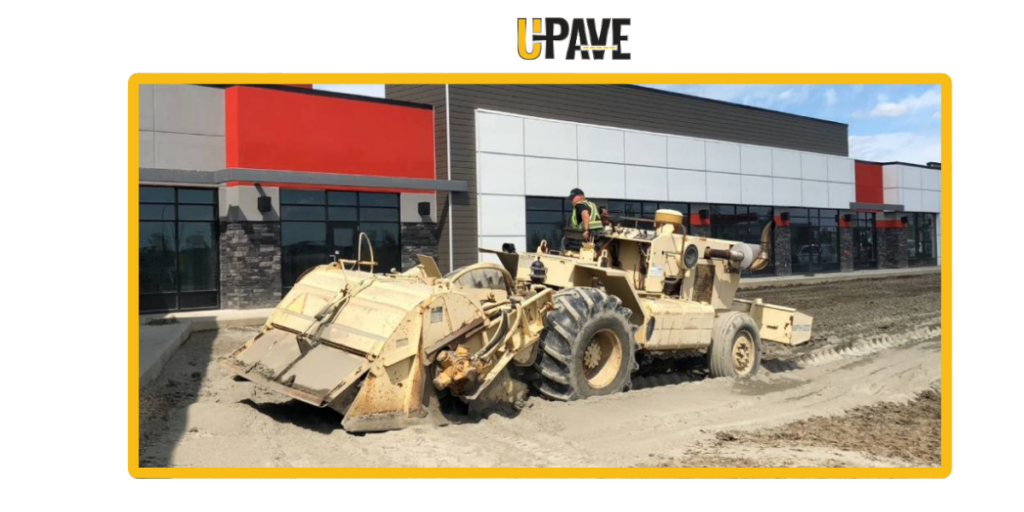
Modern paving and earthwork equipment helps crews maintain steady production, accurate application, and consistent mixing across commercial and industrial sites. The Federal Highway Administration notes that stabilized materials can be mixed directly at the jobsite or combined through a mixing plant, depending on project requirements. Read the FHWA stabilized base guidance for additional background.
Grading, compacting, and checking the stabilized layer
After mixing, the treated material is shaped to the planned grade and cross-slope. Proper grading supports drainage and creates the correct foundation for the next pavement layer.
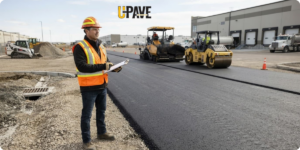
Compaction develops the density and strength needed to resist rutting, settlement, and movement under repeated traffic. Crews should check the finished surface for soft spots, low areas, inconsistent grades, and areas that still hold water. Corrections are made before asphalt or concrete is placed.
Building the final road, yard, or parking surface
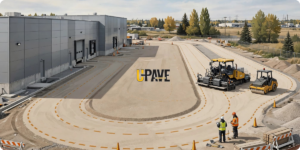
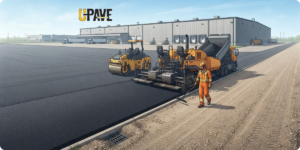
The stabilized layer may support an approved aggregate base, asphalt, concrete, or another designed surface system. Reopening does not depend only on finishing the mixing work. The full pavement design, curing requirements, weather, inspections, and site conditions affect the final schedule.
For active warehouses, retail plazas, truck yards, and commercial properties, phased construction can maintain access to selected entrances, loading areas, and traffic routes. You can Request an Asphalt Assessment to discuss your site conditions, project limits, and paving requirements with U-PAVE LTD.
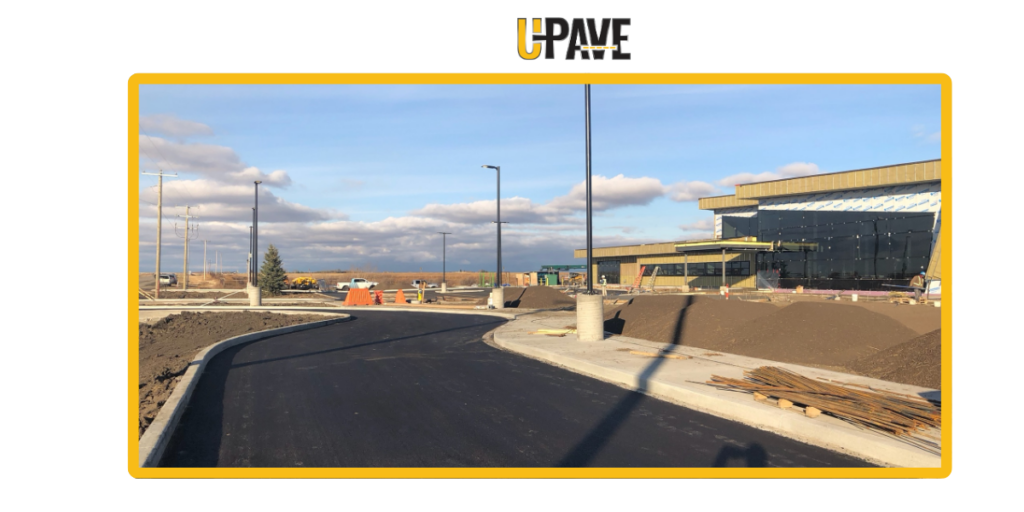
Cement Stabilization Compared With Excavation, Base Replacement, and Asphalt Overlay
Choosing the right pavement solution depends on the depth of failure, soil conditions, drainage, traffic loads, and available construction space. Cement stabilization in Edmonton can improve suitable existing material, but it isn’t the right answer for every road, parking lot, or industrial yard.
When cement stabilization is a practical choice
Cement stabilization may fit when the existing soil or aggregate can be treated, mixed, moisture-conditioned, and compacted effectively. It is often considered when pavement failure extends across a broad area and the site needs a stronger working platform before asphalt or concrete installation.
This approach can improve support without removing all existing material. It may also reduce the amount of imported aggregate, trucking, disposal, and excavation required for a large commercial or industrial project. Stabilization can be useful for:
Truck yards and warehouse access roads with widespread rutting.
Parking lots with inconsistent subgrade support.
Industrial yards that need a stronger base for heavy equipment.
Road sections where the existing material is suitable but too weak or moisture-sensitive.
Suitability must be confirmed through site assessment and project planning. Your contractor should review soil type, moisture, drainage, grades, utilities, traffic demands, and construction access before recommending cement content or treatment depth.
When full-depth base repair or excavation makes more sense
Some material cannot be treated effectively in place. Full-depth excavation and replacement may be necessary where the site contains severe contamination, buried debris, excessive organic soil, unstable fill, or material that cannot achieve reliable compaction.
Excavation can also make more sense when deep drainage failure, major utility conflicts, or significant settlement extends below the planned stabilization depth. In these conditions, removing unsuitable material and rebuilding the base provides better control over the finished grade and support structure.
Localized failures may only need targeted work, while widespread or deep problems may require base repair and reconstruction. Imported gravel, improved drainage, and full compaction can then be combined with the final pavement design.
Why an asphalt overlay cannot solve every base problem
An asphalt overlay improves the riding surface, appearance, and waterproofing of pavement that still has adequate support. It can be a practical choice when cracking is limited, grades are acceptable, drainage works properly, and the existing pavement is structurally sound. In those conditions, parking lot resurfacing services may extend the useful life of the surface.
An overlay cannot correct deep settlement, unstable soil, severe rutting, or ongoing water movement below the pavement. Weak supporting layers may continue to shift, causing cracks and surface movement to reflect through the new asphalt. Resurfacing may then delay a deeper repair rather than solve the underlying failure.
What Affects Cement Stabilization Cost and How to Plan Your Edmonton Project
Cement stabilization cost in Edmonton depends on more than the size of the paved area. Treatment depth, soil conditions, cement quantity, excavation, drainage correction, grading, compaction, testing, trucking, disposal, final asphalt thickness, traffic control, mobilization, weather, and construction phasing all affect the project budget.
A surface-only quote may miss the work required below the pavement. Request a written scope that separates preparation, stabilization, paving, and related site work so you can compare proposals accurately and plan around your operations.
Frequently Asked Questions About Cement Stabilization Edmonton
1.What is cement stabilization?
Cement stabilization mixes cement into suitable existing soil or aggregate, then moisture-conditions, grades, and compacts the material. The process creates a stronger pavement foundation that can support asphalt, concrete, or road base construction.
2. What treatment depth and cement content are proposed for each area?
The appropriate stabilization depth and cement content depend on existing soil conditions, anticipated traffic loads, site use, moisture conditions, and the pavement design above the stabilized layer. Different areas of the same property may require different treatments. Your contractor should explain the proposed depth, material requirements, and why that approach is appropriate for the site.
3. Does the drainage plan include grading, swales, catch basins, subdrains, or other corrections?
Drainage should be evaluated as part of the overall pavement solution because standing water and excessive moisture can contribute to premature pavement deterioration. Depending on the property, improvements may include regrading, correcting slopes, improving swales, repairing or adjusting catch basins, installing drainage infrastructure, or addressing other areas where water accumulates.
4. How will the crew control moisture, mix the material, and achieve proper compaction?
Successful cement stabilization requires controlled mixing, moisture management, grading, and compaction. The contractor should have a defined process for incorporating the cement into the existing material, achieving a consistent mixture, controlling moisture conditions, shaping the stabilized area, and compacting it to meet the requirements of the project before the final surface is installed.
5. What asphalt, concrete, or aggregate surface design will be placed above the stabilized layer?
Cement stabilization generally forms part of the pavement foundation rather than the finished driving surface. The surface above it may consist of asphalt, concrete, aggregate, or another specified pavement system. The final design should account for expected vehicle types, traffic volumes, heavy truck loading, drainage, and the intended use of the property.
12. Planning Cement Stabilization in Edmonton?
For commercial parking lots, industrial yards, access roads, and other heavy-use surfaces, the goal should be to address the conditions contributing to pavement failure—not simply cover the visible damage.
13. What caused the pavement failure, and how was the diagnosis confirmed?
Pavement failure can result from weak or unstable soils, inadequate base material, poor drainage, repeated freeze-thaw cycles, heavy traffic, or a combination of these conditions. Before recommending cement stabilization, the contractor should evaluate the existing pavement, base, subgrade, drainage, and visible failure patterns. Depending on the project, additional testing or investigation may be recommended to confirm the underlying cause.
14. Can cement stabilization fix drainage problems?
Cement stabilization can improve suitable weak soil, but it doesn’t correct standing water or poor drainage by itself. The project may also require grading, catch basin work, subdrains, ditching, excavation, or improved surface slopes to control water movement.
16. What affects the cost of cement stabilization in Edmonton?
Cost depends on treatment depth, site size, soil conditions, cement quantity, drainage work, grading, compaction, testing, trucking, disposal, pavement thickness, traffic control, weather, and construction phasing. A written scope should separate stabilization, preparation, paving, and related site work before proposals are compared.
6. What is the schedule, including curing, paving, weather allowances, and reopening?
The schedule depends on project size, stabilization requirements, weather, curing requirements, and the surface being installed afterward. Before work begins, the contractor should outline the major stages of construction, expected curing or waiting periods, paving dates, weather contingencies, and when each area can safely reopen to vehicles and operations.
7. How will deliveries, tenants, employees, emergency access, and heavy equipment move through the site?
For active commercial and industrial properties, traffic management should be planned before construction starts. Work may be completed in phases to maintain access to entrances, loading areas, tenant spaces, deliveries, and critical operations. Emergency access should also be considered when developing the construction and traffic-control plan.
8. What quality checks will confirm grade, density, moisture, mixing consistency, and finished surface condition?
Quality-control requirements should be established according to the project specifications. Depending on the scope, checks may address material mixing, moisture, compaction or density, finished elevations, drainage slopes, and surface condition. Ask the contractor to explain which inspections or tests will be performed and how deficiencies will be addressed before subsequent pavement layers are installed.
9. What warranty terms apply, and what conditions or exclusions should you understand?
Warranty terms should be reviewed before approving the project. Ask what workmanship is covered, how long the warranty lasts, how a warranty concern is reported, and what exclusions apply. Conditions caused by factors outside the contractor’s scope—such as subsequent excavation, utility work, unusual loading, or other site changes—may be treated differently, so the written agreement should clearly define coverage.
10. How are unexpected soil conditions, added excavation, or other change orders priced and approved?
Subsurface conditions are not always fully visible until construction begins. Your proposal should explain how unexpected weak soils, unsuitable material, additional excavation, drainage problems, or other unforeseen conditions will be handled. Change orders should clearly describe the additional work, associated cost, and schedule impact and should be approved before the extra work proceeds whenever practical.
11. What maintenance recommendations will help protect the finished pavement?
Long-term pavement performance depends on more than the initial installation. Regular inspections, timely crack sealing and repairs, drainage maintenance, catch basin care, and correcting areas where water collects can help protect the pavement system. Commercial properties should consider a preventive maintenance plan based on traffic levels, site conditions, and the condition of the finished pavement.
15. Is cement stabilization better than excavation and base replacement?
The right option depends on soil conditions, failure depth, drainage, traffic loads, and available construction depth. Stabilization may work when existing material can be mixed and compacted, while deep contamination, unstable fill, buried debris, major settlement, or severe drainage problems may require excavation and replacement.
UPAVE LTD can assess your site, review base and drainage conditions, and recommend an appropriate approach for your project. Contact the UPAVE team to request a free quote or schedule a site assessment.
How to choose a contractor for commercial or industrial stabilization
Look for a contractor with experience in Alberta soils, freeze-thaw conditions, commercial traffic, heavy truck routes, grading, excavation, drainage, base preparation, and active-site safety. Modern equipment helps crews mix, shape, and compact the work consistently, but equipment alone doesn’t replace proper planning.
U-PAVE LTD has more than 25 years of combined experience in asphalt paving and site preparation. Its in-house capabilities include excavation, grading, drainage correction, base preparation, cement stabilization, paving, and maintenance.
Ask how the contractor will phase the work around your business operations. Practical communication, clear safety planning, and defined access routes matter when you manage a warehouse, truck yard, retail plaza, industrial facility, or municipal site. You can Schedule a Site Visit to discuss conditions, scope, access, and project timing before requesting a final estimate.
Conclusion
Long-lasting pavement begins below the asphalt. When weak soil, moisture, Edmonton’s freeze-thaw cycles, or heavy traffic threaten your road or industrial yard, cement stabilization may provide the stronger foundation your project needs. It can improve suitable subgrade material, but it isn’t a universal fix for every pavement failure.
The correct approach depends on a complete site assessment, including drainage, grading, soil conditions, compaction, traffic loads, available construction depth, and your operational requirements. Repair, stabilization, base replacement, or full reconstruction may each be appropriate in different areas of the same property. Proper planning also helps protect access for deliveries, tenants, employees, and equipment during construction.
Property owners, managers, developers, and contractors can discuss site conditions with U-PAVE LTD before selecting a repair method. With more than 25 years of combined paving and site preparation experience, the team can help identify practical options for roads, parking lots, loading areas, and industrial yards. Request a Free Quote to begin planning a pavement solution built around your property’s needs.