Article prepared for: UPAVE-LTD
Lead Contractor: Frank Wilkinson
Location: 11810 Kingsway NW, Edmonton, AB, Canada
Last Updated: Sept 20th , 2026
Important Note: This article is provided for general educational and informational purposes only. Parking lot drainage and grading requirements vary depending on existing pavement and base conditions, site elevations, soil conditions, drainage patterns, traffic loads, property use, and the location and condition of existing drainage infrastructure. Recommended solutions may include regrading, drainage correction, base repair, catch basin adjustments or repairs, subgrade improvements, asphalt repair, resurfacing, or other site-specific work. The appropriate solution should be determined through a site assessment and, where required, appropriate testing, engineering, or project specifications.
Concerned about standing water, poor drainage, or recurring asphalt damage on your property? Work with an experienced asphalt company in Edmonton to identify the underlying cause before investing in repairs. Contact UPAVE LTD to arrange a site assessment and discuss grading, drainage correction, base preparation, asphalt repair, and paving solutions for your commercial or industrial property.
Table of Contents
ToggleIntroduction
Standing water is never a small problem in a commercial parking lot. It can weaken the base, enter cracks, create potholes, and shorten the life of pavement through Alberta’s freeze-thaw conditions.
For property owners, managers, industrial operators, and developers, parking lot drainage Edmonton work protects more than the asphalt. It helps protect safe access, building approaches, loading areas, and long-term maintenance budgets.
Proper grading, base preparation, drainage planning, and timely repairs all work together to keep water moving where it should.
Key Takeaways
Proper grading directs rainwater and snowmelt away from parking areas, buildings, walkways, loading zones, and other high-use areas.
Standing water can weaken the gravel base, worsen cracks and potholes, and increase pavement damage during Alberta freeze-thaw cycles.
Drainage problems may require regrading, catch basin repairs, base reconstruction, excavation, cement stabilization, resurfacing, or full-depth replacement.
Recurring puddles, sinking pavement, rutting, soft edges, and repeated potholes often indicate a drainage or base problem below the asphalt surface.
A site assessment helps determine whether localized repair, drainage correction, resurfacing, or full reconstruction is the right solution for the property.
Quick Answer
How does poor drainage damage a commercial parking lot?
Poor drainage allows water to remain on the pavement or enter cracks, pavement edges, and the gravel base. Saturated support material can lead to settlement, rutting, potholes, and cracking, especially when Edmonton’s freeze-thaw cycles and heavy vehicle traffic place additional stress on the lot.
How Proper Grading Prevents Parking Lot Damage
Asphalt drainage is the planned movement of rain, snowmelt, and surface water away from traffic areas. Proper grading directs water toward approved drainage points instead of allowing it to collect on the pavement.
A durable system considers the finished asphalt surface and the material below it. Depending on the site, that can include slopes, catch basins, culverts, swales, drainage channels, and subsurface drainage. The City of Edmonton explains that commercial lot grading is intended to direct stormwater away from buildings and toward a private drainage system or City right-of-way.
Why Standing Water Damages Asphalt and Its Base
Ponding water works its way into cracks, joints, and pavement edges. Once water reaches the gravel base or subgrade, it can soften the support beneath the asphalt.
Traffic then pushes the weakened area down. Aggregate can shift, pavement can settle, and small cracks can turn into potholes or full pavement breakup. This is common near entrances, catch basins, wheel paths, and loading areas.
Standing water also creates safety concerns. Vehicles can hydroplane in deeper puddles, pedestrians can face icy conditions, and truck traffic can damage already-soft pavement faster.
A pothole that returns in the same location often points to water and base failure below the surface, not a simple patching issue.
How Proper Grading Moves Water Away From Traffic Areas
Correct grading starts before asphalt is installed. The contractor establishes elevations that guide water away from buildings, doorways, walkways, and high-traffic areas.
Your site layout matters. Parking stalls, drive lanes, curbs, entrances, neighboring lots, catch basins, and existing drainage outlets all affect the final grade. A surface can look smooth and still hold water if those elevations are not planned correctly.
Good drainage design also avoids sending runoff toward adjoining properties. Commercial and multi-family projects must follow applicable City of Edmonton lot grading requirements, including the City’s Drainage Bylaw.
Parking Lot Drainage Edmonton: When Commercial Properties Need a Drainage Plan
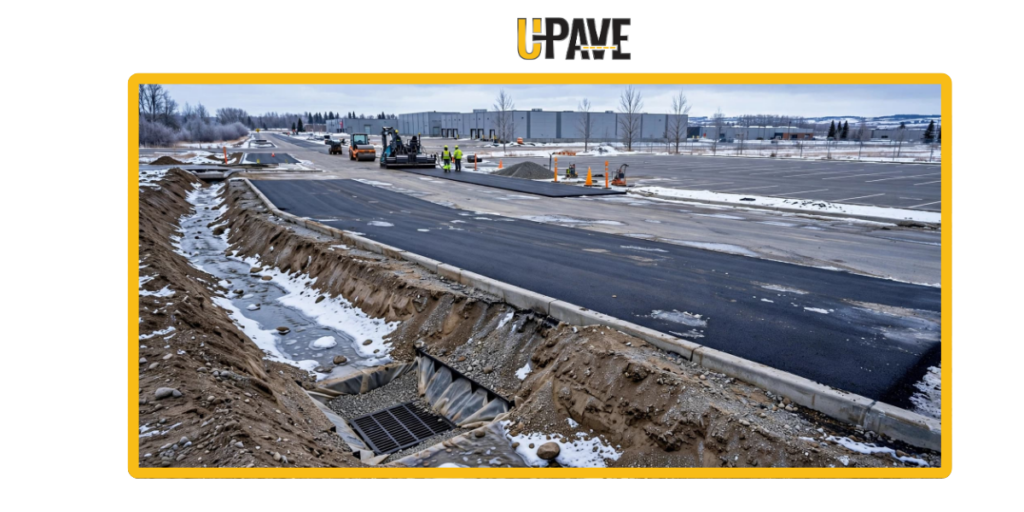
Parking lot drainage Edmonton projects are often needed when water has nowhere reliable to go. Retail plazas, office complexes, warehouses, truck yards, schools, industrial facilities, and multi-tenant developments all face this issue.
Snow accumulation and spring runoff add pressure to commercial pavement. Water can enter cracks during thaw periods, freeze again, and push pavement apart. Heavy trucks and frequent turning traffic make weak areas fail faster.
A drainage review is a practical step when you are planning resurfacing, repairs, an expansion, or a full parking lot replacement. Addressing drainage before paving helps prevent a new surface from following the same failure pattern.
Warning Signs That Your Parking Lot Has a Drainage Problem
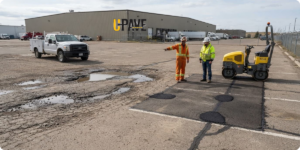
Look beyond a single puddle after a heavy rain. Repeated water in the same location is a warning that grading, drainage structures, or the base may need attention.
Common signs include:
Standing water after rain or recurring puddles after snowmelt.
Alligator cracking, potholes, ruts, or sinking pavement in the same areas.
Soft pavement edges near curbs, catch basins, or landscaped zones.
Flooded catch basins, blocked outlets, or water flowing toward a building.
Surface repairs can help with isolated defects. Recurring damage needs a closer review of the water source and support beneath the asphalt. A Request an Asphalt Assessment is the right next step when patches continue to fail.
Drainage Challenges in Industrial Yards and Loading Areas
Industrial yards carry heavier loads than standard parking areas. Turning trucks, trailers, forklifts, and loaded delivery vehicles place concentrated pressure on pavement, especially near docks and access lanes.
Water trapped under those areas reduces base support. The result can be rutting, cracking, settlement, and unsafe transitions at loading docks. Drainage work must also protect truck access and keep deliveries moving.
For active facilities, work zones need clear traffic controls, temporary routes, and a schedule built around operations. The goal is a durable repair without creating unnecessary disruption for drivers, staff, or tenants.
What Goes Into a Durable Parking Lot Drainage Project
The right drainage correction depends on the site’s condition, traffic volume, soil strength, pavement age, available outlets, and daily operations. A surface-only repair is not the answer when water has damaged the base.
U-PAVE provides paving, gravel base preparation, and cement stabilization work across Edmonton and Central Alberta. You can learn more about the company’s Alberta asphalt paving experience when planning commercial or industrial work.
Site Review, Elevations, and Drainage Investigation
A proper site review starts with the pavement condition. Low areas, cracked sections, failed patches, catch basins, outlets, curbs, and nearby structures all need to be checked.
Crews measure grades and look for settlement, blocked drainage routes, or signs that water is entering the subgrade. That information helps determine whether the problem is localized or affects a larger section of the lot.
For commercial properties, an on-site review also helps identify access limits and realistic work phases. Schedule a Site Visit to discuss the condition of your lot, yard, loading area, or access road.
Base Preparation, Excavation, and Cement Stabilization
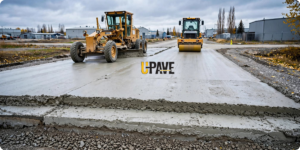
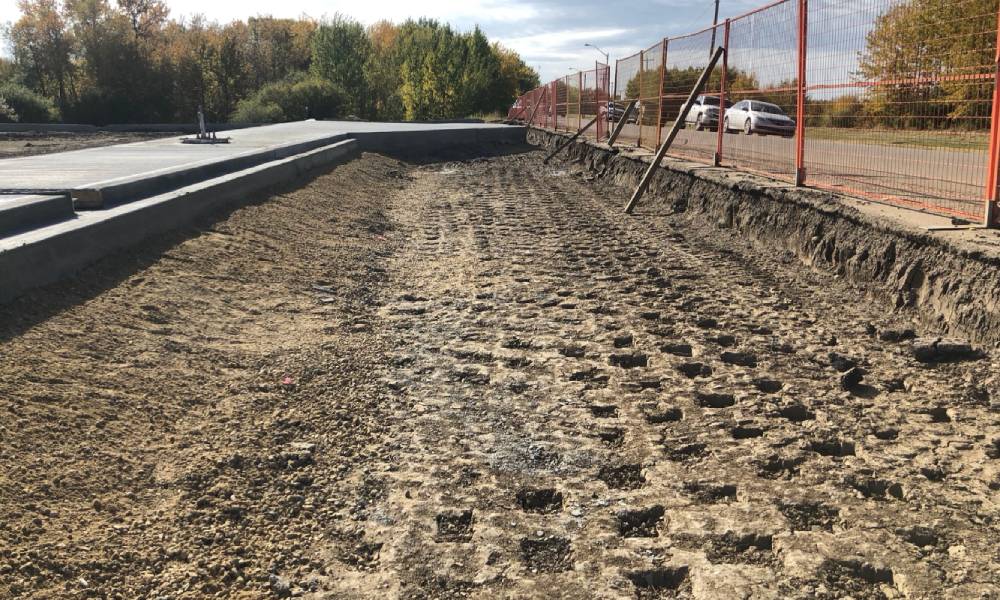
Failed pavement often needs deeper work. Crews may excavate weak asphalt and base material, remove unsuitable soils, place new gravel, regrade the area, and compact each layer before paving.
Compaction is important because loose or wet base material will not support commercial traffic properly. The new asphalt is only as strong as the surface beneath it.
Cement stabilization may be suitable when weak subgrade soils need added strength. It is not required on every project, but it can improve support where site conditions and traffic demands call for it.
Drainage Features That May Improve Water Control
Drainage improvements are selected after the source of the water problem is identified. A reliable solution may include regrading, catch basin repairs, swales, culverts, drainage channels, edge repairs, or localized base reconstruction.
Municipal requirements, discharge points, site layout, and existing drainage infrastructure all affect the final scope. EPCOR’s stormwater design guide also references City drainage bylaws and Edmonton drainage standards.
How to Plan Grading and Drainage Work Without Closing Your Business
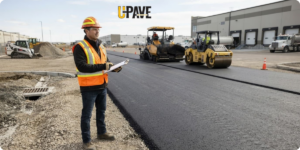
Commercial drainage repairs do not always require a full shutdown. With the right plan, crews can coordinate excavation, grading, base work, drainage corrections, and paving around your operating hours.
Phased construction can keep portions of the lot open while work moves through separate areas. This is useful for retail centers, offices, warehouses, schools, and multi-tenant properties.

Choosing Repair, Regrading, Resurfacing, or Full Reconstruction
Minor cracks or isolated surface damage may only need patching and crack sealing. Repeated ponding, sinking pavement, widespread cracking, and failed base material usually require more than a surface repair.
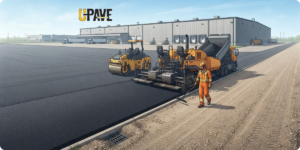
Regrading can correct water flow where the base remains sound. Resurfacing may work when the existing pavement has stable support and the drainage plan is corrected first. Full reconstruction is often the better option when the base has failed across a larger area.
The lowest-cost patch is not always the lowest-cost decision. A condition-based recommendation helps you spend on the work that will address the actual problem.
Timeline and Alberta Weather Considerations
Project timing depends on site size, excavation depth, drainage structures, material availability, weather, traffic control, and required curing or stabilization work. Each commercial site has different access needs.
Wet conditions, spring thaw, and cold temperatures can affect excavation, compaction, and asphalt placement. Clear scheduling and regular updates help your team prepare for temporary access changes.
Work can be planned around deliveries, employee parking, emergency routes, customer traffic, and tenant operations. One contractor coordinating the full scope can reduce handoffs and prevent avoidable delays.
Protecting Your Investment After Drainage Repairs
Drainage repairs need regular attention after construction. Seasonal inspections help identify new settlement, cracking, blocked catch basins, and damaged pavement edges before the problem grows.
U-PAVE can support long-term pavement maintenance planning for commercial properties. Crack sealing, pothole repairs, sealcoating where appropriate, catch basin cleaning, and snow management all help protect corrected grades and paved areas.
How Better Drainage Supports Longer Pavement Life
Good water control helps the base stay firm under traffic. That can reduce potholes, freeze-thaw damage, rutting, and premature cracking.
It also supports safer surfaces for vehicles and pedestrians. Water will not cause every pavement failure, but it is one of the main reasons commercial asphalt breaks down early.
Keep drainage paths clear before freeze-up and after spring thaw. Catch basins, outlets, curbs, and swales need to move water freely when they are needed most.
What Affects the Cost of Drainage and Grading Work
Drainage and grading costs depend on the condition of your property. Lot size, excavation depth, weak soils, gravel quantities, asphalt quantities, drainage structures, disposal, access restrictions, and traffic phasing all affect the scope.
A small low area may need localized reconstruction. A large industrial yard with settlement, truck traffic, and outlet issues may require deeper excavation and a phased plan.
An on-site assessment provides the clearest estimate. It identifies what can be repaired, what needs reconstruction, and how the work can fit your operations.
Frequently Asked Questions About Asphalt Drainage Solutions: How Proper Grading Prevents Parking Lot Damage
What are the signs of a parking lot drainage problem?
Common signs include recurring puddles, standing water after snowmelt, potholes that return in the same location, alligator cracking, sinking pavement, soft edges, flooded catch basins, and water flowing toward a building. These conditions may point to grading, drainage, or base failure.
Can drainage repairs be completed while a business remains open?
maintain access for customers, tenants, employees, deliveries, and emergency vehicles. The construction plan depends on the property layout, work area, traffic volume, drainage scope, and available alternate routes.
Can parking lot drainage problems be fixed without replacing the entire lot?
Some drainage problems can be corrected with localized regrading, catch basin repairs, drainage improvements, or base repairs. If the pavement has widespread settlement or the base has failed across a larger area, resurfacing or full-depth reconstruction may be more appropriate.
What affects the cost of parking lot drainage work in Edmonton?
Project cost depends on the size of the affected area, excavation depth, soil and base conditions, asphalt quantities, drainage structures, disposal needs, site access, traffic control, and construction phasing. A site assessment provides a more reliable project scope and estimate.
UPAVE LTD can assess your site, review base and drainage conditions, and recommend an appropriate approach for your project. Contact the UPAVE team to request a free quote or schedule a site assessment.
Conclusion: Protect Your Pavement Before Water Takes Over
Proper grading, strong base preparation, and reliable drainage work together to prevent standing water and premature pavement damage. When water is controlled, your asphalt has better support through Alberta weather and commercial traffic.
Before patching or resurfacing, identify the cause of the failure. This is especially important for heavy-use parking lots, industrial yards, truck routes, and loading areas where weak base conditions can return quickly.
For a practical site review and project estimate, Request a Free Quote from U-PAVE.