Warehouse Asphalt Paving in Edmonton: Plan for Heavy Loads
Article prepared for: UPAVE-LTD Lead Contractor: Frank Wilkinson Location: 11810 Kingsway NW, Edmonton, AB, Canada Last Updated: October 23rd , 2026
Important Note:
This article is for general educational and informational purposes only. Warehouse asphalt paving requirements vary based on soil and subgrade conditions, truck and equipment loads, traffic frequency, drainage, loading dock access, and site operations. Asphalt thickness, base preparation, grading, compaction, and construction phasing should be determined through a site-specific assessment and, where necessary, appropriate testing or engineering.
Dealing with cracking, rutting, settlement, drainage issues, or deteriorating warehouse pavement? An experienced asphalt paving contractor in Edmonton can assess your property and recommend suitable solutions. Contact UPAVE LTD for warehouse asphalt paving, industrial pavement repairs, resurfacing, excavation, grading, drainage, and phased construction planned around truck movements and warehouse operations.
Your warehouse pavement needs to support loaded trucks, dependable dock access, and safe movement across an active property. Warehouse asphalt paving in Edmonton requires proper base preparation, drainage, and construction planning that accounts for heavy loads and Alberta weather.
As an owner or property manager, you also need to control costs without creating avoidable delivery delays. A suitable paving scope protects reliable access while addressing the conditions that shorten pavement life.
Start by separating your site’s heavy-use areas from lighter-duty parking and identifying where the pavement needs stronger support.
Key Takeaways
Warehouse asphalt paving should account for heavy truck routes, loading areas, trailer staging, forklifts, and lighter-duty parking.
The right paving solution depends on the asphalt, base, subgrade, drainage, traffic, and extent of damage.
Repairs, resurfacing, milling and replacement, or full-depth reconstruction may be appropriate, depending on site conditions.
Construction phasing can help maintain essential warehouse access while work progresses.
A site assessment helps define the project scope, cost factors, and access plan.
Quick Answer
Can warehouse paving be completed without stopping deliveries?
Phased construction can keep selected loading bays, routes, or parking areas available while other sections are under construction. The phasing plan depends on the site layout, truck turning space, essential access routes, and project scope. Some areas may still need temporary closures. Request a free quote: (780) 686-5700
What Warehouse Asphalt Paving in Edmonton Needs to Handle
Your shipping lanes, receiving areas, and staff parking don’t place the same demands on asphalt. Each area needs planning based on vehicle weight, frequency, and movement.
How trucks, forklifts, and turning movements wear pavement
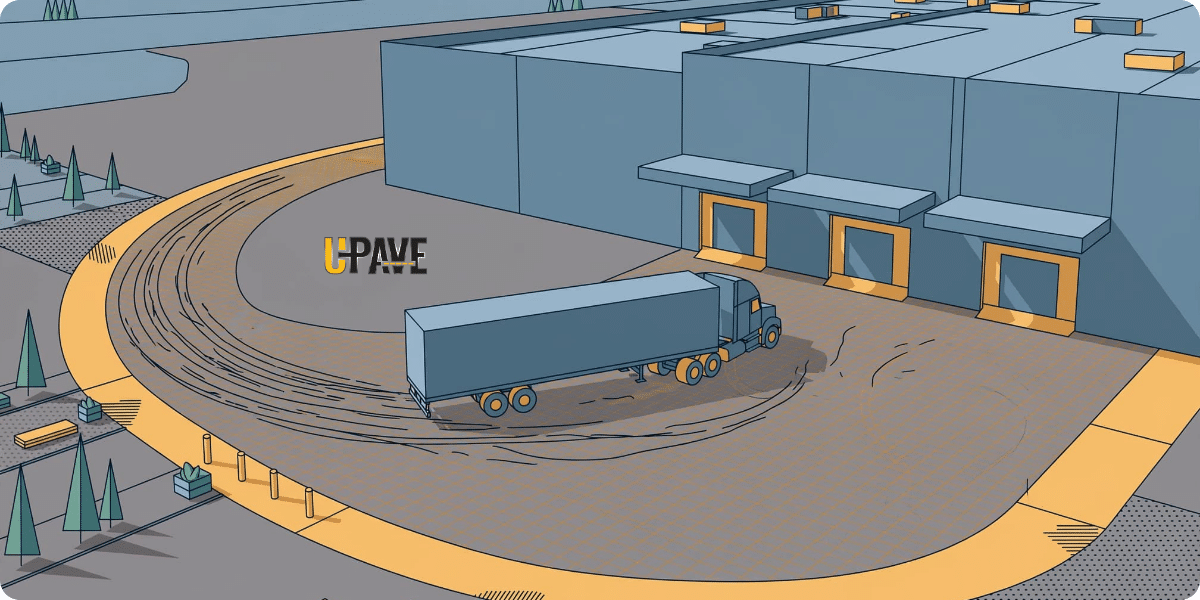
Loaded trucks repeatedly following the same wheel paths concentrate stress on narrow pavement sections. Slow turns and braking near loading docks add forces that can distort unsuitable pavement.
Trailer staging creates another demand. Parked trailers place concentrated loads through their landing gear, while forklifts with small, hard tyres can apply high contact pressures.
These areas may need stronger pavement construction and a well-prepared base. Your review should identify repeated truck routes, outdoor forklift travel, trailer positions, and dock approaches before choosing the work.
Why loading docks, access roads, and parking areas need different planning
Employee and visitor parking generally experience lighter loads than dock aprons and truck manoeuvring areas. However, a shared entrance may carry every delivery vehicle alongside staff and customer traffic.
Your access roads need suitable width, turning space, and pavement support. As with the roadway design covered in Alberta Transportation’s Pavement Design Manual, expected traffic belongs in the planning process.
A route used by loaded tractor-trailers needs different consideration than parking reserved for passenger vehicles. Tenant changes can also increase delivery frequency or introduce heavier equipment.
Our warehouse paving services address loading areas, truck routes, and parking within the same property plan. This helps you direct investment toward the areas carrying the greatest demands.
Choose a Warehouse Paving Solution That Fits the Site
Your existing pavement, supporting ground, drainage, and operations determine the appropriate solution. Surface appearance alone doesn’t establish whether an overlay will provide suitable performance.
When new asphalt, resurfacing, or milling and replacement makes sense
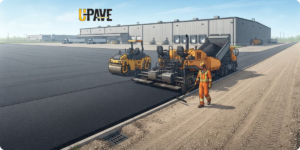
New installation suits unpaved areas, warehouse expansions, and newly prepared access routes. The work includes building suitable support beneath the finished asphalt.
An asphalt overlay adds a new layer over existing pavement. It’s worth considering when the base remains sound and surface wear is the main problem. Existing defects still need suitable preparation.
Milling removes an upper asphalt layer before replacement. This can help manage surface elevations near dock approaches, drains, and adjoining pavement. Milling alone doesn’t repair weak underlying ground.
Where failure extends through the pavement structure, reconstruction may require removing damaged asphalt and rebuilding the affected foundation.
Why base preparation and drainage matter under heavy traffic
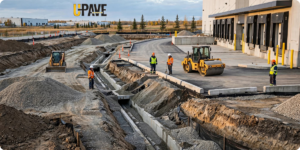
Excavation removes unsuitable material and creates room for properly prepared pavement layers. Grading shapes the ground, while compaction reduces movement under repeated loads.
The subgrade is the soil beneath the pavement structure. Where suitable for the soil and project, cement stabilization can strengthen weak subgrade. It isn’t a universal treatment for every warehouse yard.
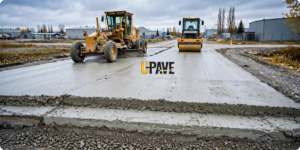
Our gravel base preparation includes aggregate placement, shaping, moisture management, and compaction. These steps provide stable support beneath the asphalt.
Drainage must work with that foundation. Water entering cracks or collecting near docks can weaken supporting materials. Freeze-thaw movement adds stress, particularly where ground stays wet. Correcting low areas and providing suitable drainage outlets helps protect the completed work.
Spot Common Warehouse Pavement Failures Before They Spread
Your pavement often shows warning signs before access becomes difficult. Recording where damage occurs helps distinguish isolated surface wear from recurring problems along loaded truck routes.
What cracks, potholes, rutting, and standing water can signal
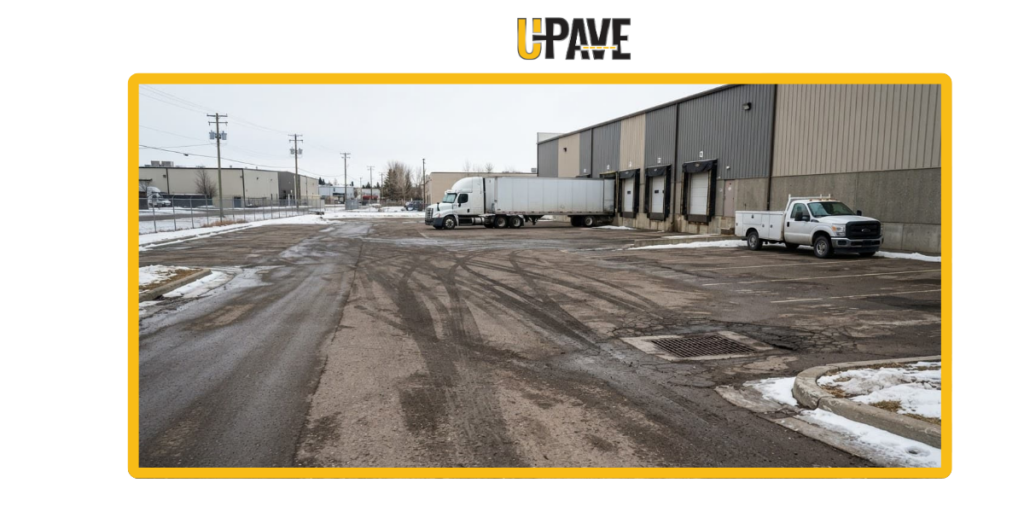
Cracks allow water into the pavement structure. Closely spaced, interconnected cracking in truck paths can indicate load-related deterioration, while other cracking may involve temperature movement or ageing.
Potholes can develop as damaged pavement breaks apart under traffic. Near dock aprons, broken edges and depressions can also affect forklift travel and loading access.
Rutting is a depression along wheel paths. Its cause may involve the asphalt, underlying layers, or both. Sinking near drains and persistent puddles can point to settlement or grading concerns.
These signs don’t establish a diagnosis by themselves. If repairs repeatedly fail in the same location, you can Request an Asphalt Assessment to determine an appropriate repair scope.
Match repairs and maintenance to the problem
Crack sealing reduces water entry through suitable cracks. Patching and pothole repair restore localized damaged areas, with deeper excavation where supporting material needs replacement.
Infrared repair can suit selected surface defects where existing asphalt can be reheated and reworked. It doesn’t correct failed ground beneath the pavement.
Drainage correction addresses water movement. Sealcoating can protect suitable surfaces against weathering and wear, but it doesn’t restore structural strength. Line repainting improves the visibility of parking spaces, pedestrian routes, and traffic controls.
Repeated patch failure at the same dock approach warrants a review of drainage and supporting layers before another surface repair.
Plan Warehouse Paving Around Daily Operations
Your site review should cover construction needs and operating requirements together. Before estimating a commercial project, you can Schedule a Site Visitto discuss access, staging, and delivery patterns.
Use construction phasing to keep deliveries and staff moving
Phased construction divides suitable projects into sections. Depending on your layout, work may proceed around selected loading bays or parking areas while other sections remain available.
Temporary routes need enough room for truck turns and safe vehicle movement. A passenger-vehicle entrance may not accommodate a loaded tractor-trailer, even if it appears open.
Your plan should coordinate tenants, carriers, employees, receiving teams, and loading appointments. Identify essential bays, peak delivery periods, emergency access, and available trailer staging space.
Some work still requires closures. Clear notice gives your warehouse team time to move trailers, redirect shipments, and adjust staff parking.
Build safety, traffic control, and Alberta weather into the schedule
Work zones need separation from pedestrians, forklifts, delivery vehicles, and construction equipment. Temporary barriers and traffic controls should make permitted routes clear.
Staff walking routes deserve attention, especially between parking areas and employee entrances. Communicate closures before shifts change and before carriers arrive.
The paving window must support proper placement and compaction, construction fundamentals covered in the 2025 Asphalt Paving Handbook. Cold surfaces, precipitation, and wet base materials can affect installation quality.
Your schedule also needs allowance for preparation, paving, and reopening based on project conditions. Delivery pressure shouldn’t determine when newly placed pavement receives heavy traffic. Coordinate reopening with the work sequence rather than assuming every section becomes available immediately after rolling.
Budget for the Full Pavement Lifecycle, Not Just the First Pour
Your project cost depends on area, existing pavement condition, excavation depth, base strength, drainage, materials, and traffic demands. Operational constraints also affect the work required.
Compare repair, resurfacing, and reconstruction costs fairly
A patching estimate and a reconstruction estimate cover different work. Compare proposals by the problems addressed and the construction included, rather than the final total alone.
Your scope should identify removal limits, base repairs, grading, drainage adjustments, asphalt placement, and traffic management. Dock transitions, catch basins, and connections to existing pavement also need attention.
A lower initial price may leave weak material or drainage problems in place. That can lead to repeated repairs and additional disruption around active loading areas.
Maintain a record of repair locations, recurring defects, and changes in traffic. Inspections after winter and during wet conditions can help you prioritise work before the next budgeting cycle.
Separate immediate access hazards from planned renewal so urgent repairs don’t consume the entire pavement budget.
Compare repair, resurfacing, and reconstruction costs fairly
Warehouse paving often depends on excavation, gravel base preparation, grading, and drainage correction. These services should support one coordinated scope rather than leave unresolved problems beneath new asphalt.
Our site preparation and base work supports those foundations. Where your warehouse includes a fleet yard or equipment storage, those heavy-use areas also need consideration.
After paving, line striping restores parking organisation and defines suitable traffic routes. Planned maintenance helps you address cracks and localized damage as conditions change.
Snow storage belongs in the property plan as well. Your designated areas should preserve access and avoid directing meltwater toward loading approaches. Coordinating pavement work with seasonal maintenance supports year-round use of your warehouse property.
Frequently Asked Questions About Warehouse Asphalt Paving in Edmonton
How do I know whether warehouse asphalt needs repair or replacement?
Localized potholes or cracking may be suitable for repairs when the surrounding asphalt and base remain sound. Widespread cracking, recurring patch failures, rutting, or settlement may point to deeper problems that need a broader assessment.
What does proper base preparation involve for warehouse paving?
Base preparation can include excavation, grading, aggregate placement, moisture management, and compaction. The work should reflect the site’s soil and subgrade conditions, drainage, and expected truck and equipment loads.
What affects the cost of warehouse asphalt paving?
Cost depends on the area being paved, existing pavement condition, excavation depth, base strength, drainage work, materials, and traffic demands. Access requirements and construction phasing can also affect the work involved.
How does Alberta weather affect warehouse paving?
Cold surfaces, precipitation, and wet base materials can affect asphalt placement and compaction. The paving schedule should account for site conditions and the construction sequence, including when each section can safely reopen to heavy traffic.
Conclusion: Build a Pavement Plan Around Your Warehouse Traffic
Your warehouse needs pavement strength that matches its truck routes, loading areas, and daily operations. Proper base preparation and drainage support durability, while construction phasing helps manage access during the work.
A sound plan directs your budget toward the cause of pavement failure, then supports the finished surface with timely maintenance. That gives you a clearer basis for repair, resurfacing, or reconstruction decisions.
If you manage a warehouse in Edmonton or the surrounding Alberta region, Request a Free Quote for paving, repairs, or site preparation suited to your property.