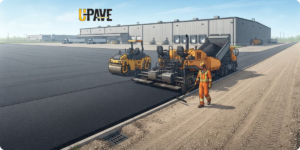
Retail Plaza Paving in Edmonton: Plan Repairs Around Your Tenants’ Needs
Article prepared for: UPAVE-LTD Lead Contractor: Frank Wilkinson Location: 11810 Kingsway NW, Edmonton, AB, Canada Last Updated: October 23rd , 2026
Important Note:
This article is for general educational and informational purposes only. Retail plaza paving in Edmontonrequirements vary based on pavement and subgrade conditions, traffic loads, drainage, tenant access, and site operations. Asphalt thickness, base preparation, grading, repairs, resurfacing, and construction phasing should be determined through a site-specific assessment and, where necessary, appropriate testing or engineering.
Dealing with potholes, cracking, drainage issues, or deteriorating parking lot asphalt? An experienced asphalt paving contractor in Edmonton can assess your property and recommend suitable solutions. Contact UPAVE LTD for retail plaza paving, parking lot repairs, resurfacing, grading, drainage, and phased construction planned around tenant and customer access.
Your retail plaza’s pavement affects customer access, tenant operations, deliveries, safety, and the appearance of your property. In Edmonton and nearby Alberta communities, busy drive aisles, storefront entrances, loading areas, and winter conditions all shape what your asphalt needs to handle.
With retail plaza paving in Edmonton, the right plan depends on traffic patterns, drainage, and the condition of the pavement and base. You’ll find practical guidance on recognizing damage, choosing repairs or replacement, phasing construction around tenants, and planning your budget.
Start by looking at what your plaza’s pavement must handle every day.
Key Takeaways
Retail plaza paving needs to support customer traffic, tenant access, deliveries, drainage, and winter maintenance.
The right solution depends on the condition of the asphalt and base, traffic patterns, drainage, and the extent of damage.
Local repairs, resurfacing, drainage correction, or full-depth replacement may be appropriate, depending on site conditions.
Construction phasing can keep key parking areas, storefronts, and loading routes accessible while work progresses.
A site assessment helps determine the project scope, budget factors, and a practical plan for tenant and customer access.
Quick Answer
How do I know whether my retail plaza needs asphalt repairs or replacement?
Localized potholes or limited cracking may be suitable for targeted repairs when the surrounding pavement and base remain sound. Widespread cracking, recurring patch failures, rutting, or settled areas can point to deeper base or drainage problems that need a broader assessment. Contact us for consultation and to request a free quote.
What Retail Plaza Paving in Edmonton Must Handle Every Day
Retail plaza pavement supports a steady mix of customer traffic, tenant operations, deliveries, and winter maintenance. Your paving plan needs to account for how people and vehicles actually move through the site, not just the total number of parking stalls.
Plan for customers, delivery vehicles, and busy drive aisles
Unlike a staff lot with predictable arrival times, a retail plaza sees customer vehicles coming and going throughout the day. Drivers slow down, turn into stalls, brake near storefronts, and queue at busy entrances. Delivery vans and service vehicles use the same aisles, while heavier trucks may occasionally travel through to reach loading areas.
That repeated turning and stopping puts more stress on asphalt near entrances, intersections, loading zones, and pedestrian crossings than in lightly used stalls. If trucks turn sharply or brake in the same locations each day, the surface can wear or deform sooner. The pavement and base need to suit the traffic each area carries. For planning considerations on a commercial site, see our commercial parking lot paving services in Edmonton.
Your layout also needs to keep pedestrian routes, accessible parking, and entrances clear. During paving or repairs, maintain safe access to tenant doors and loading areas wherever possible. In winter, snow piles and plowing routes should not block crossings or accessible spaces. The City of Edmonton’s snow and ice information for businessesoutlines property responsibilities for snow and ice on adjacent infrastructure.
Recognize cracking, potholes, rutting, and standing water
Walk the lot after rain or snowmelt and look for cracks, potholes, settled areas, ruts, loose pavement edges, and water that remains in low spots. Pay particular attention to drive aisles, loading areas, catch basins, and routes used by snow-clearing equipment. Damage in these areas can affect customer access and make winter maintenance more difficult.
A crack or pothole may begin at the surface, but recurring damage can point to a deeper problem. Weak base material, poor drainage, or settled areas can cause patches to fail and water to collect again. Repeatedly filling the same spot without addressing the cause may leave the underlying issue in place.
Compare the affected area with nearby pavement. If a surface is sinking, ruts are returning, or water pools after each thaw, arrange an assessment before choosing a repair. Our parking lot repair services in Edmonton cover common surface and drainage concerns. You can also Request an Asphalt Assessment to help determine whether the lot needs a local repair, drainage correction, or more extensive base work.
Choose Paving, Resurfacing, or Repairs for the Condition of Your Plaza
For retail plaza paving in Edmonton, the right scope depends on more than how the surface looks. Traffic from customers, delivery vehicles and service trucks, along with drainage, base condition and the extent of damage, all affect whether you need new asphalt, resurfacing or targeted repairs. A site review helps match the work to the problem and plan around tenant access.
When new asphalt or full-depth replacement makes sense
Extensive cracking, repeated patch failures, significant settlement or a weak base can point to a problem below the surface. Adding another patch may leave the cause in place, especially in drive aisles and loading areas that carry frequent turning and heavier vehicle traffic. A contractor should review the damaged areas, surrounding pavement and base conditions before recommending the scope. Our guide to choosing between asphalt repair and replacement explains the main considerations.
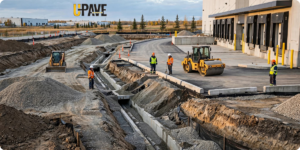
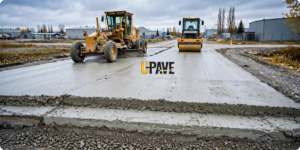
Reconstruction may involve removing asphalt, excavating unsuitable material, preparing the subgrade and rebuilding the aggregate base. The base is graded and compacted to support the pavement, then asphalt is placed and compacted to suit the site and its use. Proper preparation helps create a stable surface for customer parking, storefront access and delivery routes.
When an overlay, patch, or crack repair may be enough
An asphalt overlay can renew a worn surface when the existing pavement structure and base remain suitable. Preparation may include repairing failed areas and milling the existing asphalt to create a better surface or manage transitions at storefronts, catch basins and adjoining pavement. An overlay won’t correct a weak base or significant settlement on its own.
For limited damage, local patching can address a pothole or broken section without resurfacing the entire lot. Crack sealing may help reduce water entry when the cracks and surrounding pavement are suitable for treatment. The repair should match the damage, its cause and the surrounding surface. Repeated failures in the same spot call for a closer look before the area is patched again.
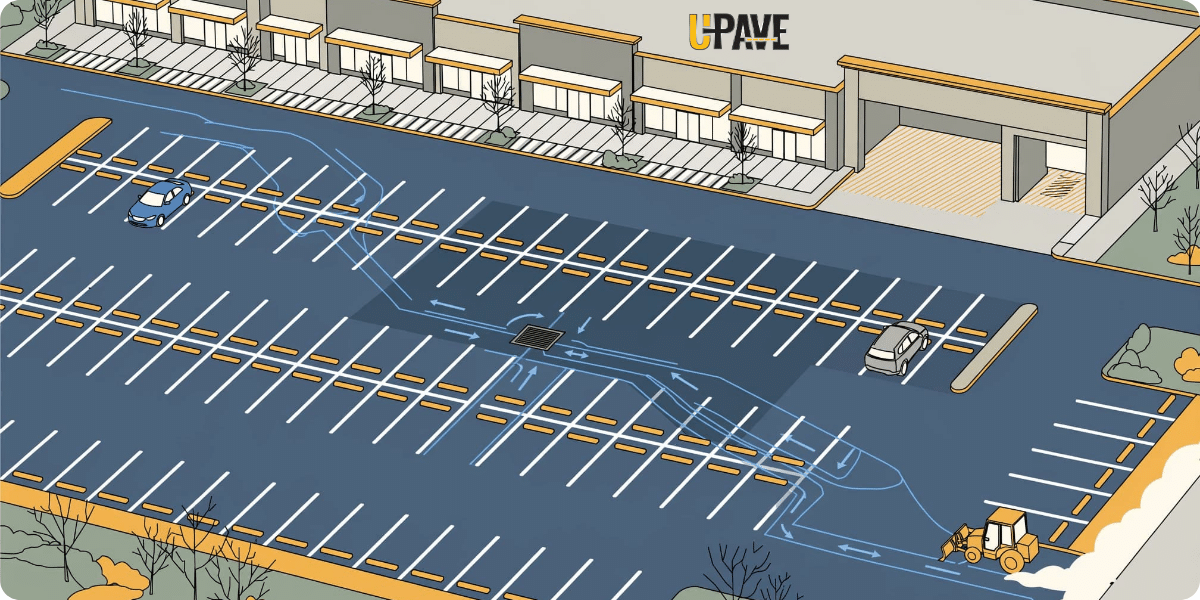
Correct drainage before water causes more damage
Poor slope, low spots and blocked or damaged catch basins can leave water standing in customer parking areas, drive aisles or loading zones. Water that enters cracks can weaken pavement, while Alberta’s freeze-thaw cycles add stress as temperatures rise and fall. Edmonton’s roadway construction standards address drainage and paving requirements for public roadways; a private plaza still needs an assessment based on its own layout and conditions.
Depending on the cause, the work may include grading or regrading, drainage correction, catch basin repairs, or a combination of these with paving. Addressing water flow as part of the project can help protect the repaired surface and reduce disruption to tenants and customers. If you have recurring cracks, settling or standing water, Request an Asphalt Assessmentto review the site and identify a suitable scope.
Keep Your Plaza Open With Careful Construction Phasing
Retail plaza paving needs to account for more than the work area. Your customers need to reach shops, tenants need access to their units, and deliveries and emergency vehicles need usable routes. A site-specific plan sets work zones, access routes, pedestrian protection, communication, and timing before construction starts.
Divide the work into practical stages
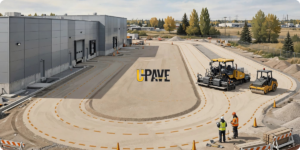
A contractor may divide a large lot into sections, completing one area while keeping other parking and access routes open. The sequence should account for storefront entrances, busy drive aisles, loading zones, and the parking customers need during business hours.
There is no standard phasing pattern for every plaza. The right sequence depends on your site layout, the scope of work, and how traffic moves through the property. For example, work may start in a less-used section, then move to a primary aisle after an alternate route is ready. Your tenants and customers should receive advance notice of changed entrances, parking areas, and delivery access. For more planning considerations, see our commercial asphalt paving guide.
Protect people, vehicles, and day-to-day operations
Clear signs, barriers, and temporary traffic direction help drivers find open parking and avoid active work zones. Keep pedestrian routes visible and separated from equipment and moving vehicles, especially near storefronts and crossings. Edmonton’s temporary traffic control manual highlights the need to protect pedestrians and cyclists when traffic arrangements change around construction.
Plan delivery windows with tenants and identify which loading areas can remain in use as work progresses. The same plan should keep emergency access usable and account for waste collection, service vehicles, and snow-clearing needs. In Edmonton, scheduling and temporary routes should consider how snow storage or plowing could affect open stalls and pedestrian paths. Regular updates help tenants direct customers and suppliers to the right areas while work is underway.
Set expectations for schedule and site access
A reliable timeline depends on the area being paved, the preparation required, weather, material availability, and crew scheduling. A surface overlay may need less work than excavation and base reconstruction, while unexpected weak areas can change the scope once preparation begins. Avoid setting a fixed duration before the site and project requirements are reviewed.
Before construction, confirm which entrances and parking sections will be affected, when access will change, and how updates will be shared. For retail plaza paving in Edmonton, we can review your layout, phasing needs, tenant operations, and project scope. If you manage a commercial site, Schedule a Site Visit to discuss site conditions and an estimate.
Budget for the Work and Protect Your Pavement Investment
Your retail plaza paving budget should reflect the condition of the lot, the work needed below the surface, and the access your tenants and customers require. Comparing proposals by total price alone can leave important scope differences unclear. Review what each option includes and how it supports the property’s long-term use.
Compare repair costs with the risk of repeated work
A local repair can be a practical choice when damage is limited to an isolated pothole, crack, or broken pavement area. If the same spots keep failing, or cracking, rutting, and settlement affect much of the lot, repeated patching may cost more over time than a larger renewal. Retail plaza drive aisles, entrances, and loading areas often take concentrated turning and delivery traffic, so assess those areas against their actual use.
Compare proposals based on the pavement’s condition and the work included. Depending on the site, the scope may include excavation, base preparation and compaction, asphalt quantity, grading, drainage corrections, traffic management, and restoration of disturbed areas. Line painting also needs to be considered, since work zones and new surfaces may require the stalls, accessible spaces, crossings, and directional markings to be repainted.
A lower initial price may reflect a smaller repair area or exclude work below the asphalt. Ask how the proposed scope addresses recurring damage and keeps tenant access, customer parking, and loading routes usable. For larger projects, parking lot asset planning in Edmonton can help you organize repairs and future renewal around the site’s condition.
Use inspections and maintenance to plan ahead
A practical pavement plan starts with regular inspections. Document cracks, potholes, settled areas, standing water, and worn markings, then prioritize hazards and repairs that affect customer routes, storefront access, or delivery vehicles. Schedule work based on the condition and use of each area, rather than applying the same treatment across the entire lot.
Depending on what an inspection finds, maintenance may include crack sealing, patching, drainage corrections, sealcoating, and repainting lines. These tasks can support pavement care when matched to the surface condition. Sealcoating does not repair failed asphalt, a weak base, or a drainage problem. A pavement repair guide advises against using seal coats on structurally failed surfaces; see the pavement repair guidance.
Timely work can help you manage deterioration before it affects more of the lot. Our parking lot maintenance services in Edmonton cover repairs, crack sealing, drainage concerns, and line repainting. When the asphalt is worn but remains structurally suitable, asphalt resurfacing in Edmonton may also be an option.
Coordinate Related Services and Get Clear Project Advice
Retail plaza paving in Edmonton needs to fit the way your property operates. Customers use the main aisles and storefront stalls, while delivery vehicles need dependable access to loading areas. Planning paving with drainage, markings, parking blocks, and winter maintenance helps keep these parts of the site working together.
Bring paving, drainage, markings, and maintenance into one plan
Site preparation, excavation, grading, and base work may be needed before asphalt is placed. Correcting low spots or drainage problems as part of the project can help keep water from pooling in drive aisles, near storefronts, or around catch basins. If you have recurring standing water, review our commercial parking lot drainage planning.
Fresh asphalt also needs a clear layout. Coordinate line painting with stall locations, accessible parking, pedestrian crossings, loading areas, and traffic arrows. Replacing damaged or misplaced parking blocks at the same time can help define stalls and protect walkways or building edges. See our asphalt line striping services in Edmonton when markings need to be added or refreshed.
Snow clearing and ice management affect how customers, tenants, and delivery drivers use the lot through winter. Plan where snow can be stored without blocking sightlines, accessible spaces, pedestrian routes, or drainage points. Edmonton’s snow and ice control informationoutlines the City’s winter operations and services. We provide Edmonton-area paving and property services, with more than 25 years of combined experience across paving, site preparation, and construction.
Prepare useful details before requesting an estimate
You usually don’t need to close the entire plaza for paving. A contractor can review whether the work can be divided into sections, keeping alternate parking, storefront access, and delivery routes open where site conditions allow. The phasing plan should identify which areas will close, when access changes, and how tenants and customers will be directed around active work.
Cracks or isolated potholes may need targeted repairs. Widespread cracking, repeated patch failures, sinking areas, or standing water can point to base or drainage issues that require a broader scope. A site review helps determine whether repair, resurfacing, or replacement suits the pavement and the way your plaza operates.
Before requesting an estimate, gather:
Your property address and approximate work area.
Known trouble spots, drainage concerns, and any past repairs.
Tenant access, loading requirements, and timing constraints.
These details help us prepare for a site review and assess the work needed. If you’re dealing with cracks, potholes, sinking pavement, or standing water, Request an Asphalt Assessment to discuss the site and suitable next steps.
Frequently Asked Questions About Retail Plaza Paving in Edmonton
Can paving work be phased to keep a retail plaza open?
A contractor can divide the work into sections when the site layout and project scope allow. The plan should identify alternate parking, storefront access, loading routes, pedestrian paths, and how tenants and customers will be notified of changes.
How do Edmonton winters affect retail plaza asphalt?
Freeze-thaw cycles can put added stress on asphalt, especially where water enters cracks or collects in low areas. Good drainage, suitable base preparation, and repairs matched to the pavement condition help address these site risks.
What affects the cost of retail plaza paving in Edmonton?
Cost depends on the area being paved, the condition of the asphalt and base, and whether the work includes excavation, grading, drainage correction, traffic management, or line painting. Comparing proposals by scope helps clarify what each price includes.
Conclusion:
Retail plaza paving in Edmonton needs to support daily customer traffic, tenant access, delivery vehicles, and safe routes through the property. Sound base preparation and proper drainage help protect the asphalt, while repairs or resurfacing should match the condition of each area.
A practical phasing plan can keep storefronts, parking areas, and loading zones accessible as work progresses. We can review your plaza’s paving needs and discuss suitable options for your site. Request a FreeQuote or learn more about retail plaza paving in Edmonton.